
The Gyanvapi issue has been at the centre of a long-drawn legal battle with the Hindu side arguing that the Gyanvapi mosque was allegedly built on the remains of a pre-existing temple, while the Muslim side has contested the claim.
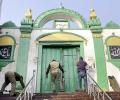
With the Uttar Pradesh Assembly polls scheduled for 2027, political experts are observing an increasing trend of temple-mosque disputes in the state, leading to heightened polarization. Recent bypolls saw the use of divisive slogans, and analysts believe this trend will intensify as the 2027 elections approach. The recent surge in claims about the existence of Hindu temples at the sites of mosques in various cities has fueled this polarization. The BJP-led government has been accused of promoting communal polarization, while opposition parties like the SP have criticized the ruling party's actions. The RSS chief has called for restraint in raising new temple-related disputes. Experts predict that communal polarization is likely to escalate in the coming days.
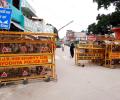
Unlike in the past, the Vishwa Hindu Parishad is not celebrating any "Shaurya Diwas" (Bravery Day) on Tuesday and there are no plans by the Muslim community to observe a "Black Day".

AIMPLB member Zafaryab Jilani on Wednesday said the proposed mosque in Ayodhya following last year's Supreme Court verdict is against the Waqf Act and 'illegal' under the Shariat laws.

A timeline of key events that shaped the RSS' journey, including the various highs and lows, as the organization approaches its 100th anniversary.
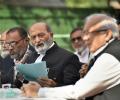
In a historic verdict in November on the Ramjanmabhoomi-Babri Masjid dispute, the Supreme Court ruled in favour of construction of a temple. It also ruled that an alternative five-acre plot must be found for a mosque within Ayodhya.

From a modest start with baithaks of a handful of swayamsevaks in a small town in Nagpur, the RSS, which completes 100 years of its foundation on Thursday, has come a long way to become the world's biggest voluntary organisation with a pan-India presence, shaping the country's political and social discourse.
Glimpses from India and around the world that will make you smile and cry.
'The idea is to have a place where people can come together and bridge the gap. It will be a contemporary design for the future, and not have the shadows of the past' Ritwik Sharma reports.

"It (mosque) should be built where it is required....It is not required in Ayodhya where people are already worshipping...," the seer told NDTV 24X7.

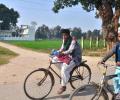
Walking, cycling and even skating! Covering long distances amid bone-chilling cold, people from all over the country and cutting across religions are flocking to the temple town of Ayodhya ahead of the consecration ceremony on January 22.

"Interim orders wherever granted shall continue. Re-list in first half of April, 2024," the bench said in its order and directed the parties to complete the pleadings by then.

Earlier on Wednesday, the district court ruled that a priest can perform prayers before the idols in a cellar of the Gyanvapi Masjid, a significant development in the legal battle over the mosque adjacent to the Kashi Vishwanath temple.

Mir Baki was not the commander who had led the invasion on Ayodhya, Mishra said leading the bench to ask him as to what he was trying to prove by referring to these historical books.
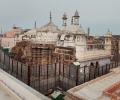
In a major victory for the Hindu side, a Varanasi court on Wednesday allowed Hindu devotees to offer prayers inside the 'Vyas ka Tekhana' area inside the Gyanvapi mosque complex.

The new idol of Lord Ram was placed in the sanctum sanctorum of Ayodhya's Ram Janmabhoomi temple on Thursday afternoon, ahead of the January 22 consecration ceremony.

Efficient land use, minimum congestion, a focus on dharamshalas (inns) and homestays, upgrading the infrastructure while retaining the historical and cultural character of the city are some of the highlights of the plan prepared by Kukreja, the managing principal of CP Kukreja Architects.

"I did not want to take the photograph of Lord Ram but etch his image in my heart instead," said Amit Pathak, a resident of Tulsinagar in Ayodhya, a day ahead of the 'pran pratishtha' ceremony at the Ram temple.
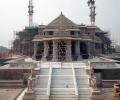
If Saudi Arabia, with just two Muslim holy sites of Mecca and Medina, can create a huge tourism-based ecosystem beyond oil, Ayodhya is sure to become the world's hottest religious tourism site in less than a decade, predicts R Jagannathan.
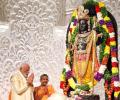
The new Ram Lalla idol was consecrated at the Ayodhya temple on Monday, an event led by Prime Minister Narendra Modi and watched by lakhs of people on television at their homes and in temples across the country.
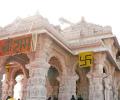
The BJP's Murshidabad unit in West Bengal announced plans to construct a Ram temple in Berhampore, days after TMC MLA Humayun Kabir proposed to set up a mosque modeled after the Babri Masjid in Beldanga. The temple construction, estimated to cost Rs 10 crore, is expected to begin on January 22, 2025, one year after the inauguration of the Ram temple in Ayodhya. Kabir's announcement sparked political controversy, with opposition parties accusing him of attempting to polarise communities for political gain. The BJP's counterproposal is seen as a strategic move to strengthen its presence among the Hindu community in Murshidabad.

Ayodhya Nagar Nigam corporator Haji Asad hoped that Kashi and Mathura issues will not be raked up after the CBI court ruling.

Prayers were performed in a cellar of the Gyanvapi mosque in Varanasi on Wednesday night following court orders allowing the resumption of a practice said to have been discontinued three decades back, Kashi Vishwanath temple trust president said.
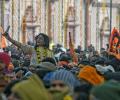
'Divine experience and a proud moment' is how the 15 couples who were the 'mukhya yajman' for the consecration ceremony at the Ram temple in Ayodhya described the grand event and said that the day will be forever etched in their memories.
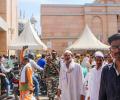
The Act prohibits conversion of any place of worship and provides for the maintenance of the religious character of any place of worship as it existed on August 15, 1947.
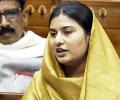
Samajwadi Party leader and Kairana MP Iqra Choudhary has moved the Supreme Court seeking effective implementation of the Places of Worship (Special Provisions) Act, 1991. This move comes amidst several petitions challenging the law's validity, including those filed by the Akhil Bhartiya Sant Samiti and lawyer Ashwini Upadhyay. The Supreme Court, in December 2022, had restrained all courts from examining fresh suits and passing interim orders in pending cases seeking to reclaim religious places. The Act aims to maintain the religious character of places of worship as they existed on August 15, 1947, but the dispute relating to Ram Janmabhoomi-Babri Masjid at Ayodhya was kept out of its purview. The court has listed Choudhary's plea with other pending pleas for February 17.

Invitees to the 'pran pratishtha' consecration ceremony at the Ram temple started arriving Sunday in Ayodhya -- once a sleepy town now resplendent with new infrastructure and gripped by heightened religious fervour on the eve of a seminal event in India's political and religious history.
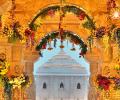
A new landmark of India -- both structural and spiritual -- rises on Ayodhya's horizon on Monday as a new-age architectural marvel of elegant sandstones, diligently carved by craftspeople with dedication and devotion to Lord Ram.
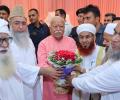
'This is just the beginning. You have to wait and watch to see things getting better.'
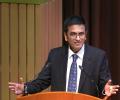
Besides the present CJI Chandrachud, former CJIs Ranjan Gogoi and SA Bobde and former judges Ashok Bhushan and S Abdul Nazeer were part of the bench which had delivered the historic verdict on November 9, 2019.
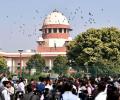
A bench comprising Chief Justice Sanjiv Khanna and Justice Sanjay Kumar also indicated that it may not take up the pending scheduled petitions, heard earlier by a three-judge bench, during the day as it was sitting in a combination of two judges.
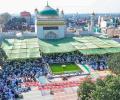
The law prohibits conversion of any place of worship and provides for the maintenance of the religious character of any place of worship as it existed on August 15, 1947.

Days after local civic body declared Aalamgiri Masjid 'hazardous' and pasted notice banning entry into building, Hanumangarhi temple trust, which is in possession of the masjid land, not only allowed its reconstruction and agreed to bear cost but also welcomed Muslims to offer namaz in premises.
The Vishwa Hindu Parishad on Saturday demanded that a grand Ram temple be built in the 67 acre plot surrounding the disputed site in Ayodhya and said 'no new mosque' can be built there as it has been established as the birth place of Lord Ram.

Imam Umer Ahmed Ilyasi also said that from the day of the event, he has been getting abuse and 'threats on phone calls' from a section of people.

'Sri Ayodhyaji will emerge as the greatest centre of cultural togetherness, universal harmony, vasudeva kutumbakam, compassion, and love for every single living being on this Earth.'

Can ordinary citizens counter this backward march? Can peace activists ensure that the two communities retain their bonds? Do they have a choice, asks Jyoti Punwani.

The decision will be taken by the trust in consultation with Shankaracharya Vijayendra Saraswati and other seers, trust functionaries said.
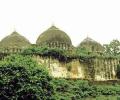
'Pass the law on Ram temple without any delay and stop fooling the majority'

Members from the Jayant Chaudhary's Rashtriya Lok Dal too were part of the group, their participation seen as another indication that the party is all set to switch sides from the SP to the ruling Bharatiya Janata Party ahead of the Lok Sabha elections.
 © 2026 Rediff.com - Advertise with us - Disclaimer - Privacy Policy - Sitemap - Feedback - About us - Terms of use - Grievances